Published: 08/21/2026
By Catherine Wu, Global Health Communications Assistant, and Jamie Hansen, Global Health Communications Manager
A new spring course, “PEDS 237/EBS 238: Equitable Global Partnerships in Health and Beyond,” asked students to examine the relationships at the center of global partnerships. Over ten weeks of discussions, case studies, and conversations with leaders, students learned about injustices and power imbalances in global health and explored how to counteract them by cultivating more equitable, human-centered collaborations.
The course grew out of “Transforming Global Health Partnerships,” a textbook authored by 90 authors from 26 countries, presenting frameworks for fair, sustainable, impactful partnerships to shape the future of global health research. The book was co-edited by A. Desiree LaBeaud, MD, MS, professor of pediatrics, associate dean of global health, and lead course instructor. Co-instructors included Amelia Meyer, MS, LaBeaud Lab research manager, and Amna Tariq, PhD, and Valeria Ramírez Castañeda, PhD, both postdoctoral scholars in the LaBeaud Lab.
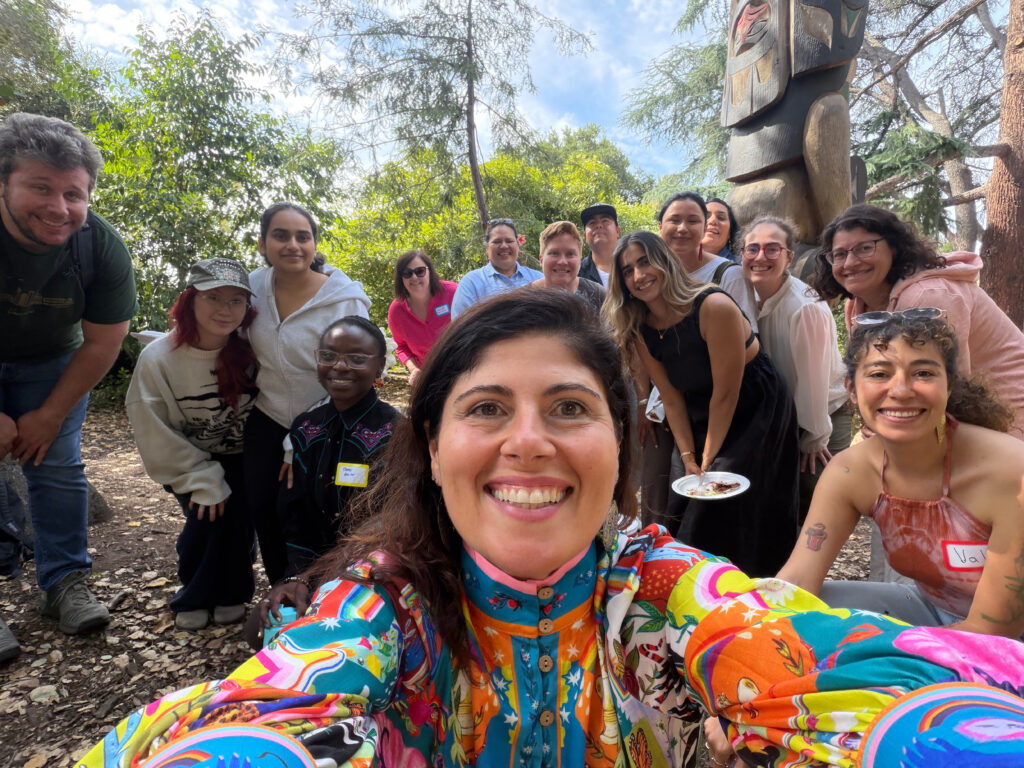
“We wanted to help students embody partnership, practice it, and realize that bringing your whole self to your partnerships is the key to changing yourself, the work and the systems in which we operate,” LaBeaud said.
Bringing one’s whole self also became an ethos of the class, something that stood out to students such as Lúta Keegan-Two Bulls, BA ‘26, who is now an incoming student in Sustainability Science and Practice MA ‘27 at the Doerr School of Sustainability. She was drawn to the class by a desire to learn from the diverse perspectives of the many guest speakers but stayed because of the unparalleled care and attention of her class peers and the professors. “What really stood out was that we didn’t get on our electronics at all, even without being asked. We were very attentive, so whenever someone was speaking, we were listening to what they had to say,” she recalled.
Students started the quarter examining colonialism, decolonization, power dynamics, and how such structures underlie partnerships in health and beyond. They then turned inward, exploring their values and identities.
The course also taught conflict resolution, something that Keegan-Two Bulls had never encountered in a class and found to be considered taboo in many settings. “It wasn’t taboo in this course,” she observed. “We talked about it, explored it through scenarios and role playing, and figured out how to come to a solution. I loved that, and I’m going to use it in my future career, because conflict is inevitable, even with the closest people in our lives.”
Students then explored the different frameworks for equitable collaboration, drawing on examples applied in Indigenous data governance, citizen science, team science, and more.
Exploring different ways of knowing can strengthen partnerships, Meyer, a course instructor, said.
“When we approach collaboration with curiosity and authenticity, rather than assuming one perspective is more important than another, we create space for better science and stronger relationships,” she said.
Keegan-Two Bulls, who is a member of the Oglala Lakota Tribe and calls the Pine Ridge Reservation in South Dakota home, valued her introduction through the course to a specific framework for data collection and governance created by the First Nations of Canada. The framework ensures that First Nations have ultimate control over how health and economic data about them is gathered, used, and shared. It has deeply shaped her thinking about research and relationships.
“I was really inspired by it and used it as a guiding framework for my project in another class I took, Philanthropy for Sustainable Development,” she said. That course culminated in one project receiving a $50,000 implementation prize, which went to Keegan Two-Bulls and her two other group members Julia Perez-Pacheco and Viviana Chuquijajas.
Course instructors Castañeda and Tariq noted that the class emphasized the value of experience over theory. Through conversations with guest speakers who had firsthand experience with global partnerships, students learned how to “make partnerships stronger and better for continuous relationships with folks across the globe,” Tariq said.
Keegan-Two Bulls is applying these principles in the ongoing project inspired by the Equitable Partnerships and Sustainable Philanthropy classes. She and Perez-Pacheco are working closely with a food sovereignty organization called Siċaŋġu Collective, located on the Rosebud reservation in South Dakota, which leads community gardening initiatives and manages the nation’s largest tribally owned buffalo herd. They have conducted an on-site visit during the summer to inform an Indigenous centered impact report, inspired by the framework she learned during the Equitable Partnerships class, to ensure that any public information shared is aligned with Siċanġu Collective standards.
This momentum has inspired the pair post-graduation, giving them confidence that they can have a positive impact through their future careers, Keegan-Two Bulls said. She plans to continue her involvement in tribal political and agricultural affairs throughout her lifetime. Her Lakota people are a matriarchal society. She wants the public to be aware of the role that Indigenous women have in environmental sustainability worldwide, such as efforts like buffalo restoration. Projects such as this showcase all the phenomenal people it takes in advancing tribal self-determination in the U.S. and globally.
“Developing this project was one of the most meaningful ways to close out my senior year, and I attribute it to these two courses,” she said.
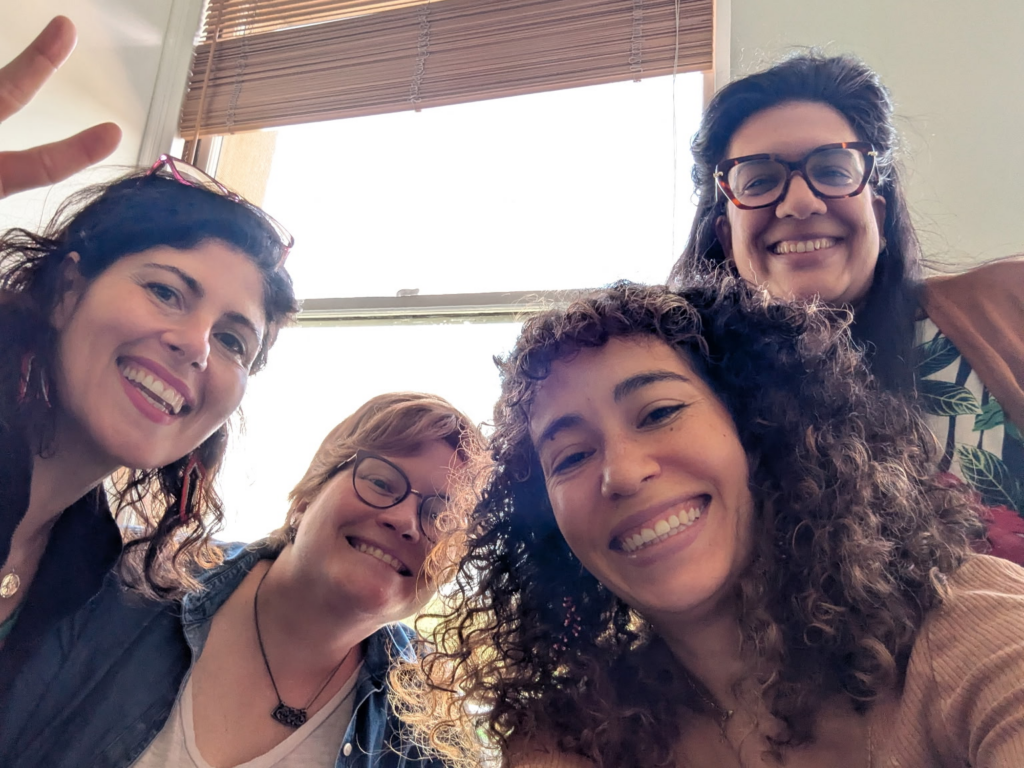
The final session, taught by LaBeaud, centered on joy as the engine to buffer conflict and sustain partnerships over time, with students joining together in an outdoor potluck meant to help students experience first-hand the value of interpersonal connection.
“Joy was a word spoken over and over in class,” Keegan-Two Bulls noted. It is one of the main things I walked away from the class really wanting to cultivate in my life. There’s so much we can be down about in the world, but with a mindset shift, we can find joy all around us.”
Overall, the class deepened students’ understanding of how to build and sustain meaningful partnerships that can benefit the world.
“What the world needs right now is more equitable and transformative partnerships so that we can more effectively solve the global and planetary health existential crises before us,” LaBeaud said.
PEDS 237/EBS 238 is scheduled to be offered in Spring quarter 2027. The syllabus, readings, and recordings can be found on the LaBeaud Lab website here. The course is designed for graduate students and requires an application. Learn more about other CIGH courses here.